

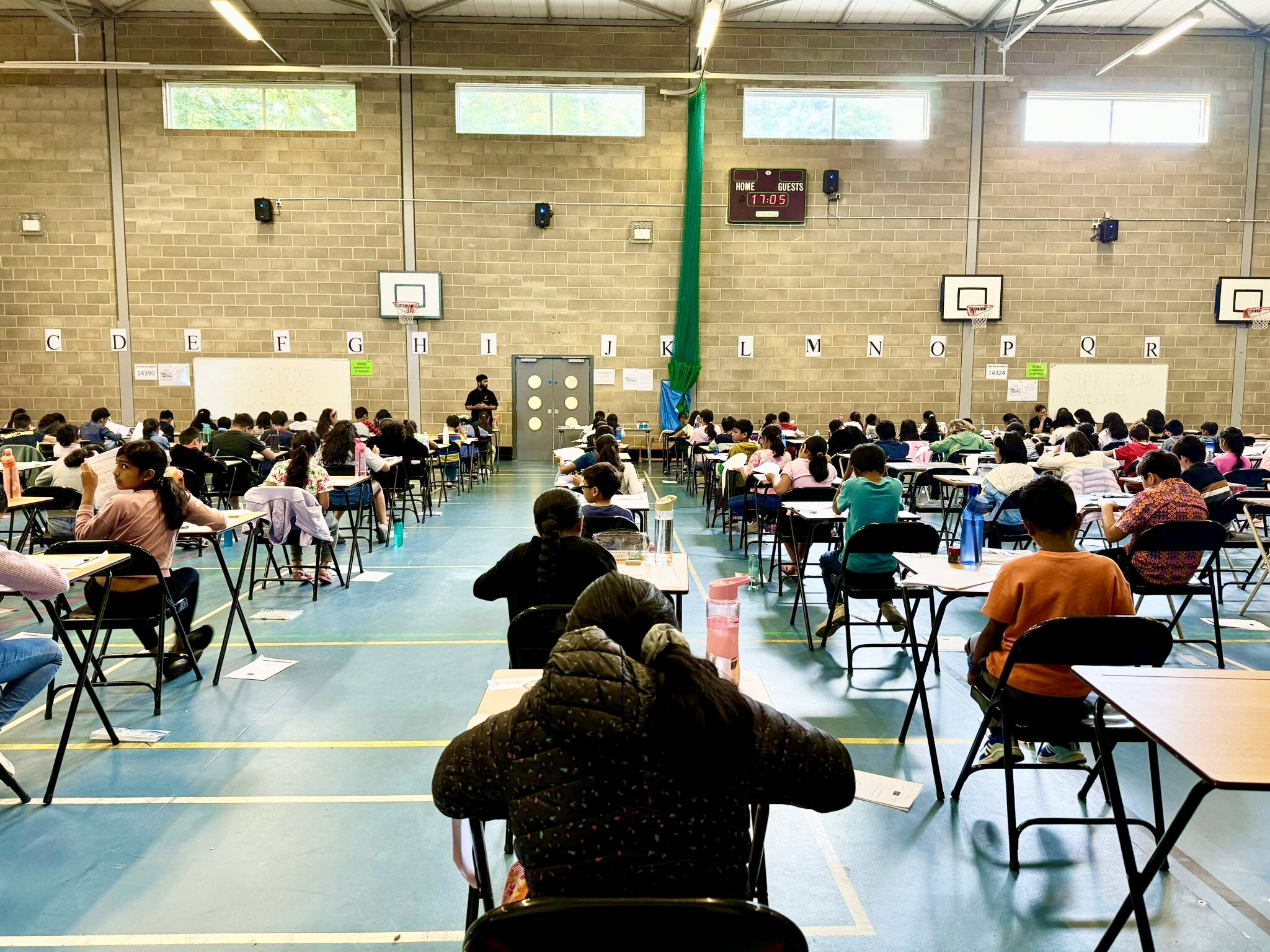
Every September I meet parents who have just discovered that “the 11+ in Sutton” is really two tests, not one, and that the first one decides whether your child is invited to the second. So let me set it out plainly, the way I wish someone had set it out for me when my own daughter was in Year 5.
The short version
- The SET is one test used by six Sutton grammar schools. Your child sits it once.
- It has two multiple-choice papers, English and Maths, based on the Key Stage 2 curriculum. There is no verbal or non-verbal reasoning.
- Children who do well enough are invited to a second stage at the schools (Greenshaw is the exception).
- You register in the summer of Year 5. Miss the window and your child cannot sit the test.
- Passing makes your child eligible. It does not guarantee a place.
Which schools use it
The Selective Eligibility Test covers six schools:
- Greenshaw High School (its selective places only)
- Nonsuch High School for Girls
- Sutton Grammar School
- Wallington County Grammar School
- Wallington High School for Girls
- Wilson’s School
You register once and tick the schools you are interested in. Your child then sits one test, and the score is used by each school on your list.
The dates that matter
These were the dates for children starting Year 7 in September 2027. The schools publish the next year’s dates on their admissions pages, so check them in the spring of Year 5.
| What | When (2027 entry) |
|---|---|
| Registration opens | 1 May 2026 |
| Registration closes | 31 July 2026 |
| Selective Eligibility Test | 15 September 2026 |
| Girls’ second stage (Nonsuch and Wallington Girls) | 26 September 2026 |
| Boys’ second stage (Sutton Grammar and Wallington County) | 3 October 2026 |
| Wilson’s aptitude day, for shortlisted boys | 10 October 2026 |
| Results to families | mid October 2026 |
| Council application deadline | 31 October 2026 |
| National Offer Day | 1 March 2027 |
Put the registration window in your diary now. It closes at the end of July, when half of us are thinking about holidays, and the schools do not accept late registrations because a family was away.
What the test looks like
The SET is two papers, English and Maths, each roughly 40 to 50 minutes long. Both are multiple choice, and both are based on what children learn at primary school up to the end of Year 5 and into Year 6. That last point is important. There is no verbal reasoning and no non-verbal reasoning, so the puzzle books you may remember from your own childhood are not what this test is about.
The English paper checks comprehension, vocabulary, spelling, punctuation and grammar. The Maths paper covers the Key Stage 2 curriculum, and the questions reward children who are quick and accurate with the basics and can then think a step further.
Scores are age-standardised. A child born in August is not marked against a child born the previous September on raw marks alone. I mention this because summer-born children often worry that they are behind. The standardisation is there precisely for them.
The second stage
The SET decides who goes through. Children who reach the threshold for a school are invited to its second stage, which is harder and includes written work, so it is where the real separation happens.
- English: a longer piece of writing, about an hour. The boys’ schools also test comprehension in a written format.
- Maths: a written paper of about 45 minutes, where children show their working.
Greenshaw is the exception and uses SET scores only. Wilson’s runs its own aptitude day for the boys it shortlists. Each school then combines the scores in its own way. Sutton Grammar, for example, gives the second-stage papers more weight than the SET.
The SET gets your child through the door. The written papers are where the places are won, so writing has to be part of preparation from the start.
Manju Pillai
This is why our Year 5 classes include written English and written Maths every week, and why our mock exams include papers our teachers mark by hand. Multiple-choice practice alone leaves children underprepared for stage two.
Passing is not the same as a place
A result letter that says your child is eligible is a very good day. It is not an offer. Places are offered on 1 March through your home council, using each school’s own admission rules. Some schools rank purely on score. Others give priority to children living in a defined area. Read each school’s admission arrangements carefully, because they change from year to year and they decide who is offered a place.
You must also name the schools on your council application by 31 October. Registering for the SET does not do this for you. Many parents miss this step every year.
Preparing for the 11+?Our Year 4 and Year 5 classes run in Croydon, Sutton and online. Start with a short assessment and we will recommend the right group.
How we prepare children for it
Our Year 5 programme starts in September and runs in small ability groups. Each month children have lessons face to face with me and online with Mrs Leila Boumazouna, with about an hour of homework a day, five days a week. Weekends stay free, and I am firm about that.
From the spring, children sit full mock exams on Sundays at Harris Academy Purley. Our teachers mark the written papers and return them within a week with a ranking, so parents see where their child really stands against a large group rather than one class.
Last year 95.17% of our children who sat the Sutton test cleared it, and every girl who reached the second stage passed it. Those numbers come from steady weekly work, not a summer of cramming.
Questions parents ask me
Can my child sit the SET if we live outside Sutton?
Yes. You do not have to live in Sutton to register or sit the test. Where you live can matter later, when places are offered, because some schools give priority to children in a defined area. Check each school’s admission arrangements.
Does my child need to learn verbal reasoning?
Not for the SET. The papers are English and Maths only. Some other grammar tests, including those used by some schools outside Sutton, do include reasoning, so check the format of every test your child is sitting.
What if my child is ill on test day?
Contact the schools straight away. They have procedures for illness, but they expect to hear from you on the day, with evidence.
Can my child sit the SET again?
No. It is taken once, in the September of Year 6.
When should we start preparing?
For most children, the start of Year 5 is right. Before that, reading widely and knowing times tables inside out will do more good than practice papers.