

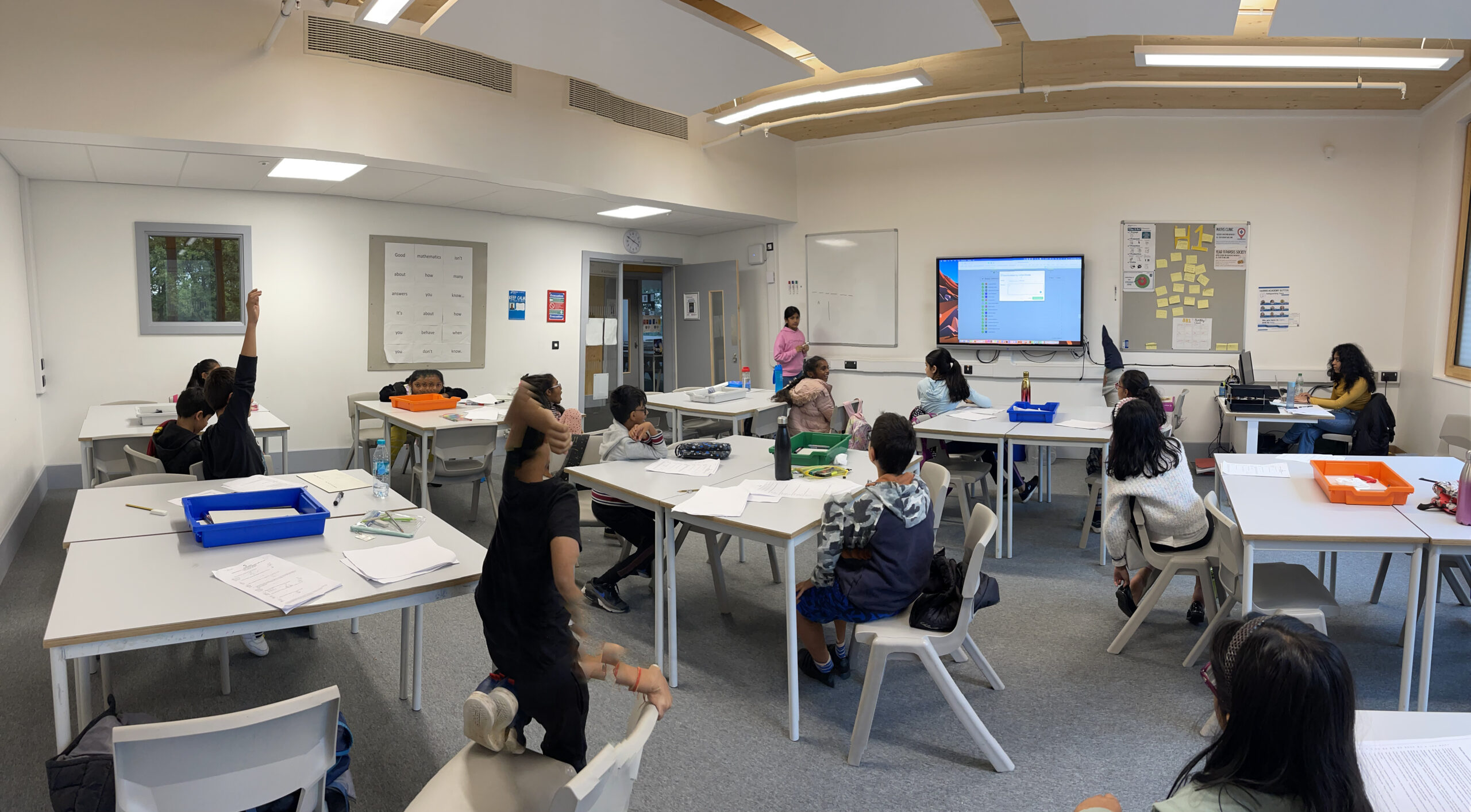
The routine that works best is almost always the boring one. The same time, the same place, a short session, five days a week, and weekends off.
I have seen plenty of families start Year 5 with a colour-coded timetable and three hours of papers every Saturday. By February everyone is exhausted, and the child has learned mainly that homework means arguments. The families who do best do less, but they do it every day.
The short version
- About 30 minutes a day in Year 4, about an hour a day in Year 5, five days a week.
- Same time, same place, every day. Decide once, then stop negotiating.
- Keep weekends free. Rest is part of the plan.
- Mark together, fix mistakes together, and move on.
How much, and when
As a rough guide, about half an hour a day in Year 4 is plenty. In Year 5, children in our programme do about an hour a day, five days a week. That is enough to cover the ground properly and still leave time to be a child.
One family wrote in their review that they followed exactly this advice: half an hour a day, with weekends free. That is not unusual. It is what the families who do well usually do.
Setting it up
- Pick a time and keep it. Straight after a snack, before screens, works for most children. Straight after school with no break usually does not.
- Pick a place. A clear table, good light, no phone. The same spot each day becomes a signal that it is work time.
- Set the length, not the amount. “Thirty minutes of Maths” ends. “Finish this paper” can drag on all evening.
- Stay nearby, not on top of them. Be in the room, doing your own thing. Step in if they are stuck, not the moment they pause.
- Stop on time. Even mid question. It teaches that the session has an end, which makes starting the next one easier.
Consistency beats intensity. Twenty good minutes every day will always beat three tired hours on a Sunday.
Manju Pillai
Marking and mistakes
The learning happens in the mistakes, so do not skip marking. Go through wrong answers together the same day if you can. Ask your child to explain how they got their answer before you say anything. Often they spot the slip themselves, and that sticks far better than being told.
Keep a small list of the mistakes that come up more than once, such as a times table, a spelling, or a type of question. That list is worth more than another practice paper.
When it goes wrong
It will, sometimes. A bad day at school, a tired week, a birthday party. Let the odd day go. What you are protecting is the habit, not any single session.
If every session has become a battle, it is usually a sign that the work is too hard, too long, or at the wrong time of day. Change one of those before anything else. And tell your child’s teacher. We would much rather know.
Weekends
Keep them free. I say this to every family who joins us, and I mean it. Children need time to play, see friends and be bored. They come back on Monday sharper. If you are tempted to add weekend work “just to be safe”, please do not.
Preparing for the 11+?Our Year 4 and Year 5 classes run in Croydon, Sutton and online. Start with a short assessment and we will recommend the right group.
What about the school holidays?
A lighter version of the routine keeps skills warm: a short session most weekdays, with proper breaks. Our summer intensive is optional, and it is not a substitute for the year’s steady work.
My child finishes early. Should I give them more?
Give them a book instead. Reading is the best extra work there is.
Should I sit with them the whole time?
In Year 3 and early Year 4, you might. By Year 5, aim to be nearby rather than beside them. Working alone is part of what the test asks of them.